



Coasts, cliffs and dunes
A dune 101 m high, 40,000 basalt columns, a flat rock 604 m above a fjord and arches that appear only at low tide: coasts and sea cliffs worth the detour.
- 1 place
Coasts to visit: sea cliffs, dunes, tidal beaches and clifftop trails compared
This page gathers the coasts with a page on the site: 1 coasts in 1 countries, from a Galician beach that exists at low tide alone to a rock shelf 1,982 ft above a fjord. Each page gives the walk to the edge, the tide window, permits, car parks and the rules on dogs and drones, read at the source.
Read more
Use it to choose. The text below sorts the coasts by what you stand on, chalk, basalt, granite or sand, compares them in a table, says which ones the tide rules, what costs money, when to come and who reaches the view without a car. Filter the grid by country, or open the map.
Where to stay
Hotels, guesthouses and rentals around the places most visited on this page.
Affiliate links: if you book through them, we earn a commission. The price you pay does not change. How this site is funded
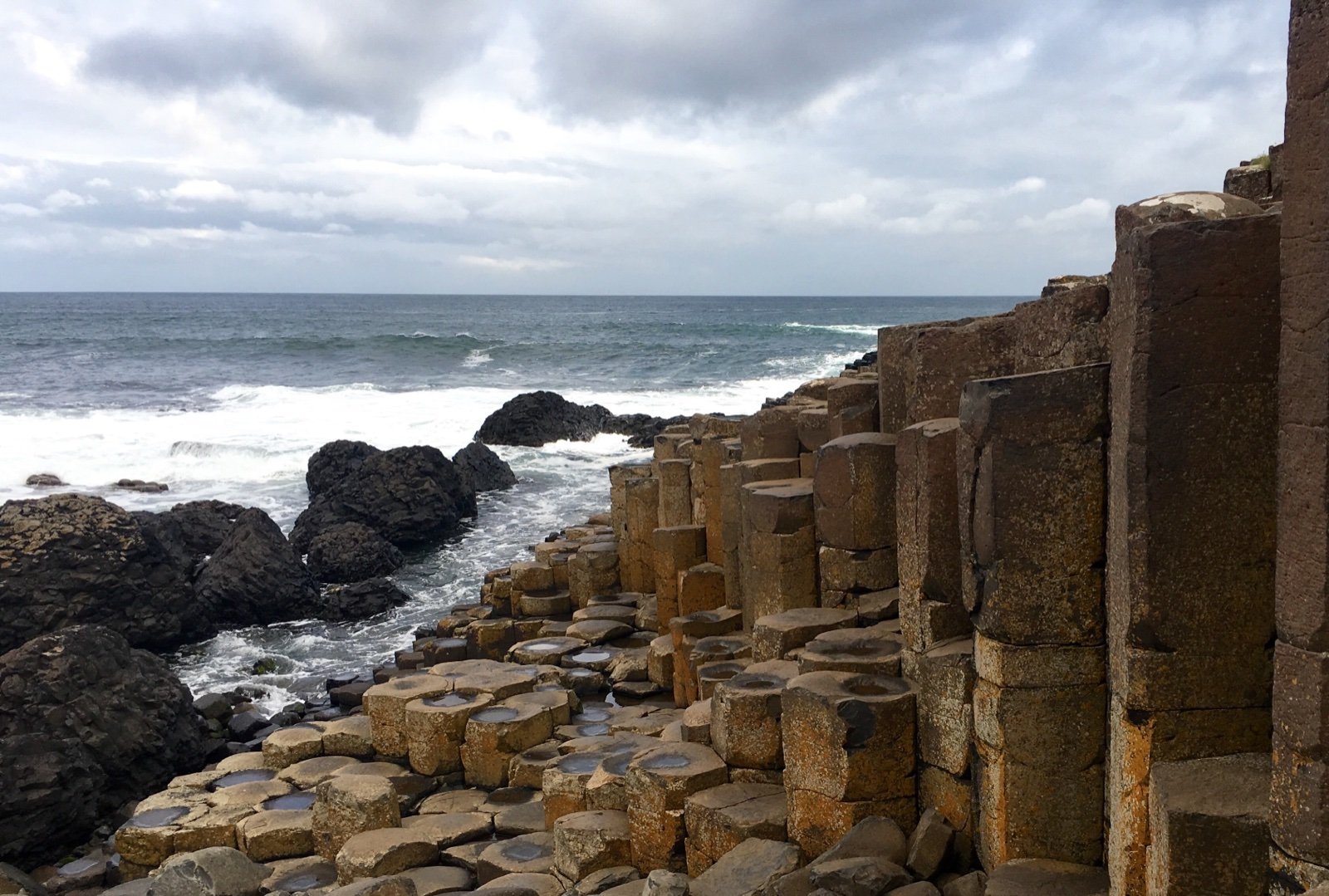 Giant's CausewayUnited KingdomSee hotels
Cliffs, a dune, a beach under the tide and a stone causeway
The rock decides the visit: chalk crumbles, granite holds, a dune moves, a beach comes and goes.
Basalt columns
The Giant’s Causeway, over 40,000 of them stepping into the sea, World Heritage since 1986.
How to choose among the coasts: seven compared
The walk to the view and what it costs; the full table of length and height follows.
| Coast | Country | The walk | What you pay |
|---|---|---|---|
| Giant’s Causeway | United Kingdom | Blue Trail under 1 mi; Green Trail about 2 mi | Free to the stones; Visitor Experience from £16 |
Tides, rockfalls and edges without railings
Some coasts are read on the tide table first; the others ask for distance from the edge.
As Catedrais
On the sand from two hours before to two hours after low tide, the Xunta’s window; the coast is almost flat and the water returns fast.
Étretat
A municipal order in force since 28 April 2025 closes the walks under the cliffs and the Trou à l’Homme tunnel, which traps walkers on a rising tide; beaches open in front of the promenade alone.
Moher and the Raz
Ledges collapse at Moher, and orange or red weather alerts close the site; at the Pointe du Raz, Wikipedia warns against the Trou de l’enfer under the point.
Preikestolen
No fence on the plateau and part of the trail beside high cliffs; back at the car park before dark from September to March.
Permits, tickets and car parks
The view is free on most of these coasts; the car park, a permit or a visitor centre is where the money goes.
A free permit
At As Catedrais in Holy Week and from 1 July to 30 September, named, valid one day, booked at most 30 days ahead.
A ticket
At the Cliffs of Moher: €15 for an adult at the gate in 2026, under-12s free; off-peak slots cost €9 online in 2027.
Free stones, paid extras
At the Giant’s Causeway: the walk costs nothing, the Visitor Experience starts at £16, walkers’ parking at £12.
Parking alone
At the Dune of Pilat (€7 for 4 h in high season), the Pointe du Raz (€8 a day) and Preikestolen (275 NOK over 2 h, reinvested in the trail), all read in October 2026.
Free or paid
No entrance fee
When to come: puffins, winter cliffs and quiet hours
French coasts are also gathered under France; the islands have their own page, and every coast sits among the natural sites.
Season
Puffins at Moher from the end of March to mid-July, best in May and June; October to March at Étretat, promoted by the tourist office; June to August is the peak at Preikestolen, busiest between 8:00 and 10:00; sunrise or sunset on the Dune of Pilat in summer.
Calendar
The Maison de site of the Pointe du Raz opens from April to the end of October; the stairs of the dune stand from spring to after All Saints; Moher closes on 24, 25 and 26 December.
Frequently asked questions
Which coasts can you visit for free?
The Dune of Pilat, the Pointe du Raz, Preikestolen, As Catedrais and the stones of the Giant’s Causeway cost nothing to reach on foot; the car park is the charge, €7 for 4 hours at Pilat in high season, €8 a day at the Raz, 275 NOK over 2 hours at Preikestolen, £12 for walkers at the Causeway. The Cliffs of Moher sell a ticket, €15 for an adult at the gate in 2026, with children under 12 free.
Do you need to book to visit these coasts?
At As Catedrais, yes, in Holy Week and from 1 July to 30 September: a free named permit, booked at most 30 days ahead. The Cliffs of Moher say tickets must be booked online, and the National Trust recommends pre-booking the Visitor Experience at the Giant’s Causeway. The dune, the Pointe du Raz, Preikestolen and Étretat take no booking, and the Pilat car park cannot be booked either.
How long is the walk to the view?
About 15 minutes to the crest of the Dune of Pilat and 2,625 ft from the car park to the Pointe du Raz. Under 1 mi on the Blue Trail to the stones of the Giant’s Causeway, 2.2 mi for the paved loop at the Cliffs of Moher, up to 2 hours. Preikestolen is a hike of 5 mi there and back, about 4 hours with 1,640 ft of climbing.
Can you walk under the cliffs at Étretat or on the sand at As Catedrais?
Under the Étretat cliffs, no: a municipal order in force since 28 April 2025 bans the walks below the cliffs and the Trou à l’Homme tunnel, and beaches are open in front of the promenade alone. On the sand at As Catedrais, yes, from two hours before to two hours after low tide, with a permit in Holy Week and from 1 July to 30 September; at high tide the sea covers almost the whole beach.
Which coasts suit a wheelchair or a pushchair?
The Cliffs of Moher visitor centre is wheelchair accessible, with 2,625 ft of paved paths and two electric buggies driven by staff. At the Giant’s Causeway the centre and the Green Trail are accessible and wheelchairs are lent free. The upper paths at As Catedrais are adapted, the Pointe du Raz runs a shuttle at €1 over its 2,625 ft, and at the Dune of Pilat the reception area alone is accessible. Preikestolen is not suitable for pushchairs or wheelchairs.
How do you reach these coasts without a car?
By train from Bordeaux to Arcachon in about 50 minutes, then Baïa bus line 3 to the Dune of Pilat in 25; from Paris Saint-Lazare to Bréauté-Beuzeville or Le Havre, then a coach to Étretat. For the Giant’s Causeway, train from Belfast or Derry to Coleraine and Ulsterbus 172; for Preikestolen, a bus from Stavanger in about 50 minutes through the Ryfylke tunnel, booked online. Bus lines 952 and 953 serve the Pointe du Raz.