



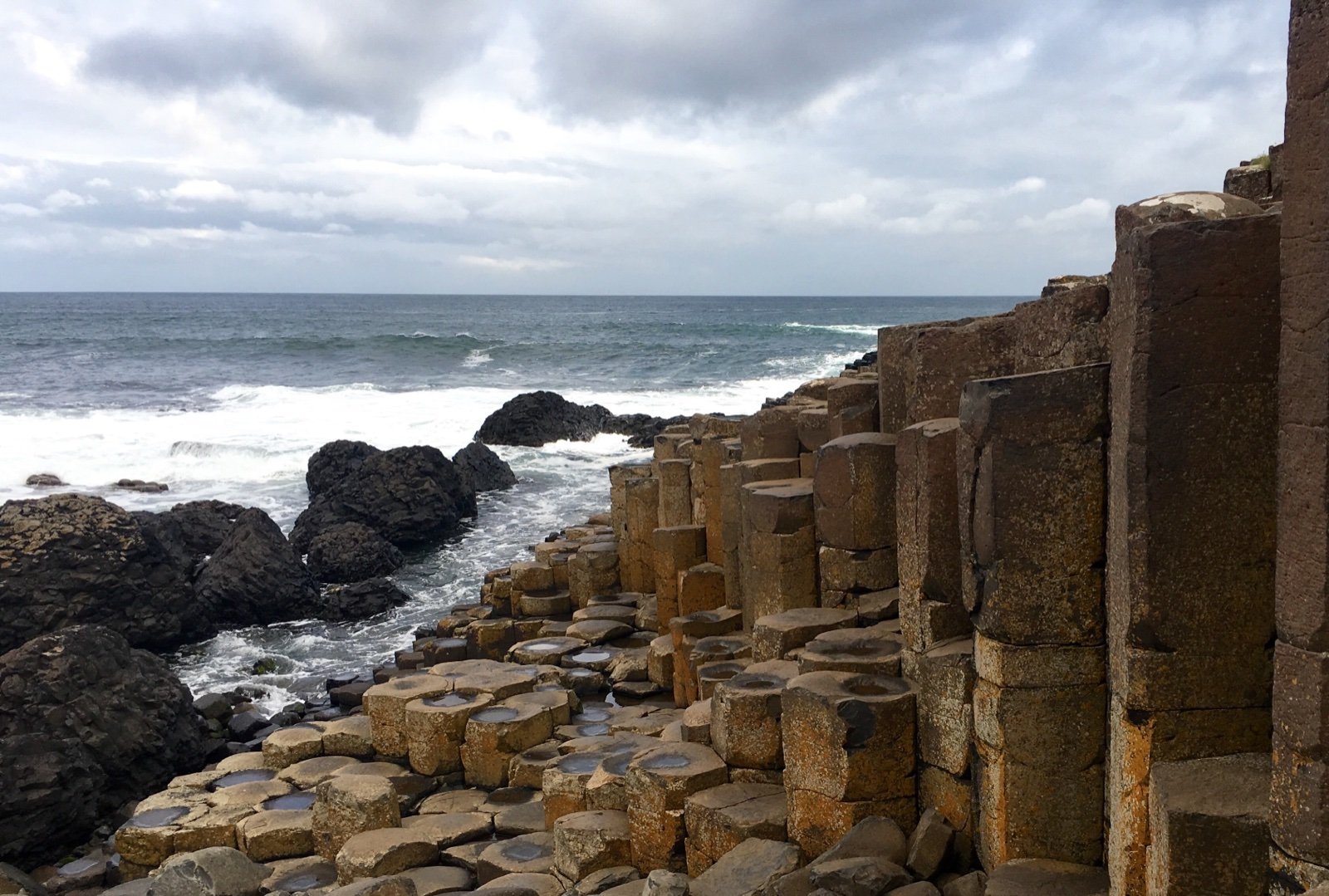
Giant’s Causeway
Over 40,000 basalt columns on the north Antrim coast, Northern Ireland’s first World Heritage Site: free to walk to the stones, four trails across a 5 km site, and a Visitor Experience ticket for parking, tours and audio guide.
At a glance
- Over 40,000 basalt columns, formed a little under 60 million years ago
- Northern Ireland’s first World Heritage Site, listed in 1986
- Free to walk to the stones; the Visitor Experience ticket adds parking, tours and audio guide
- Four waymarked trails across a 5 km site, the direct one under 1.6 km
- Dogs on leads welcome everywhere, visitor centre and guided tours included
- Visitor centre and Green Trail fully accessible, with free wheelchair and scooter loans
Where to stay
Hotels, guesthouses and rentals around Giant's Causeway
Check availability with our partners
Affiliate links: if you book through them, we earn a commission. The price you pay does not change. How this site is funded
BushmillsClosest
2.5 mi as the crow flies
See hotelsColeraine
9.3 mi as the crow flies
See hotelsBallycastle
11 mi as the crow flies
See hotels
Tickets and prices
| Admission, Everyone | Free |
|---|---|
| Parking, Per vehicle | £12 |
| Guided tour, Adult | £16 |
| Guided tour, Child | £8 |
| Guided tour, Family | £40 |
Source: National Trust
How the visit runs
The visitor centre
Start in the award-winning building: interactive exhibition, audio guide in 11 languages, and guided tours leaving every hour for Visitor Experience ticket holders.
Down the Blue Trail under 1.6 km
The direct route to the stones. Two battery electric minibuses shuttle between the visitor centre and the formations for those who prefer not to walk.
Port Ganny and the Stookans
The bay before the Little Causeway. Look west for the stooped stone figure of Finn’s grandmother heading up the Stookans headland.
The stones
Hexagonal columns by the tens of thousands, and the formations to pick out among them: the Organ, the Honeycomb, the Giant’s Harp, the Chimney Stacks.
Port Noffer and the Giant’s Boot
The giant’s bay holds the Giant’s Boot, the one Finn McCool is said to have lost.
On the clifftop trails 1.28 to 3.2 km
The Red Trail offers cliff panoramas; the accessible Green Trail, about 3.2 km, has views of the causeway, Scotland and the Inishowen Peninsula.
The four waymarked trails
| Trail | Route | Distance | Character |
|---|---|---|---|
| Blue | Visitor centre to the stones | under 1.6 km | The direct route |
| Green | Clifftop | about 3.2 km | Accessible; views of the causeway, Scotland and the Inishowen Peninsula |
| Red | Clifftop | 1.28 to 3.2 km | Cliff panoramas |
| Yellow | Runkerry Head to Hamilton’s Seat, along the Causeway Coast Way | about 2.9 km | Clifftop trail |
Source: National Trust, Giant’s Causeway (read October 2026).
Before you go
- Booking: the National Trust strongly recommends pre-booking the Visitor Experience, for the best rates and to spread visitor numbers through the day.
- Parking: the on-site car park is reserved for Visitor Experience ticket holders and National Trust members; walkers use the Causeway Coast Way Car Park at Innisfree Farm, 60 Causeway Road, £12 per vehicle through the JustPark app, free for members, as read in October 2026.
- Hours on 15 October 2026: coast open dawn to dusk, Causeway Coast Way Car Park 5:00 to 20:00, visitor centre 9:00 to 17:00; times follow the site calendar.
- Coins: do not wedge them into the stones; the ritual damages the site and the National Trust runs a coin removal project.
- Dogs on leads are welcome in all areas of the visitor centre and across the World Heritage Site.
- Wheelchairs and mobility scooters are lent free to members and ticket holders, and a Changing Places facility is available; the site has ramps and slopes.
- Groups arriving by coach or minibus must pre-book with the Causeway booking office by email.
- Guided hike: the Clifftop Experience, run with Away A Wee Walk, covers about 8 km of clifftop paths.
What is allowed
| Topic | Rule | Source |
|---|---|---|
| Dogs | Restricted | National Trust |
Rules checked with the site manager on October 15, 2026. They can change at short notice: check before you go.
How to get there
Giant's CausewayGateway towns
- Bushmillsabout 3 kmGiant’s Causeway
By the B147, Causeway Road; parking around the site is limited.
- Bushmillsabout 3 kmGiant’s Causeway
Park and Ride from Dundarave Car Park; combined Translink and Visitor Experience ticket.
- Coleraineabout 18 kmGiant’s Causeway
Ulsterbus 172, the bus connection from Coleraine after trains from Belfast or Derry/Londonderry.
- Ballycastleabout 21 kmGiant’s Causeway
By road.
Over 40,000 basalt columns step down into the sea on the north Antrim coast, about 1.9 mi from Bushmills, where the National Trust cares for Northern Ireland’s first World Heritage Site. Most columns have six sides; some have four, others eight.
Lava, ice and the sea: how the columns formed
The stones are a little under 60 million years old, and their story runs in four steps:
- Ireland was still attached to North America; as Europe pulled away, fissures opened and lava rose through them.
- The lower lava layers cooled at a slow pace, contracted and cracked into the regular hexagonal pattern seen today.
- During the Ice Age, glaciers scraped away the upper layers of rock.
- The sea then eroded the coast and exposed the columns.
Weathering has carved several formations into shapes with names: the Organ, the Giant’s Boot, the Giant’s Eyes, the Shepherd’s Steps, the Honeycomb, the Giant’s Harp and the Chimney Stacks.
Finn McCool, Benandonner and a grandmother turned to stone
Legend gives the causeway a builder. The Irish giant Finn McCool laid it across the sea to face his Scottish rival Benandonner, who tore it up as he fled back to Scotland. Two places on the shore carry the story:
- At Port Noffer, the giant’s bay, lies the boot Finn is said to have lost.
- West of Port Ganny, the bay before the Little Causeway, a stooped figure of stone climbs the Stookans headland: Finn’s grandmother, frozen in stone, in the version told by Causeway guides in the 1700s and early 1800s.
Tramway crowds, a fire and the National Trust
The site became popular with tourists in the 19th century, particularly after the Giant’s Causeway Tramway opened. Only after the National Trust took over its care in the 1960s were some of the vestiges of commercialism removed.
- 1986: World Heritage listing under two criteria, as an exceptional natural phenomenon and a major stage in the Earth’s history.
- 1987: National Nature Reserve. The site is also a Special Area of Conservation and an ASSI, inside an Area of Outstanding Natural Beauty.
- 2000 to 2012: no permanent visitor centre, after the 1986 building burned down in 2000.
- Today: an award-winning sustainable visitor centre with exhibition, audio guides, café and a shop where over 85% of the items are made by local crafters.
Reaching the B147 without a car
The visitor centre stands on the B147, Causeway Road, and parking in the surrounding area is limited. Public transport does reach it:
- Trains from Belfast or Derry/Londonderry run to Coleraine, where Ulsterbus 172 continues to the causeway.
- Other bus routes serve the site, some of them seasonal: Goldliner 221, Causeway Rambler 402, Open Top Causeway Coast 177 and Antrim Coaster 252.
- Coach and minibus groups must book with the Causeway booking office by email; they cannot book online.
- Walkers on the Causeway Coast Way, a coastal route of about 33 mi, join the site’s own trail network.
Frequently asked questions
Is the Giant’s Causeway free to visit?
Yes, walking to the stones is free. What costs money is the Visitor Experience ticket (reserved parking, guided tours every hour, audio guide, exhibition) and parking: £12 per vehicle at the Causeway Coast Way Car Park for walkers.
How much is the Giant’s Causeway Visitor Experience?
From £16 for an adult, £8 for a child aged 5 to 17, £40 for a family of two adults and up to three children, £24 for a one-adult family, as read in October 2026. Under-5s and National Trust members go free.
How far is the walk from the visitor centre to the stones?
Under 1.6 km on the Blue Trail, the direct route. Two electric minibuses run a shuttle for those who prefer not to walk.
How do you get to the Giant’s Causeway by public transport?
Train from Belfast or Derry/Londonderry to Coleraine, then Ulsterbus 172. From Bushmills, a Park and Ride leaves Dundarave Car Park with a ticket that combines the Translink ride and Visitor Experience entry.
Can you take a dog to the Giant’s Causeway?
Yes, on a lead, in all areas of the visitor centre and across the World Heritage Site, guided tours included.
Is the Giant’s Causeway wheelchair accessible?
The visitor centre and the Green Trail are fully accessible, and wheelchairs and scooters are lent free to members and ticket holders. The site has ramps and slopes.
How many columns are there at the Giant’s Causeway?
Over 40,000, hexagonal for the most part, some with four to eight sides, formed a little under 60 million years ago.
Sources
5 sources
- National Trust consulted on October 15, 2026
- OpenStreetMap consulted on October 15, 2026
- Wikidata consulted on October 15, 2026
- Wikipedia consulted on October 15, 2026
- Wikipédia consulted on October 15, 2026