
Cairngorms National Park
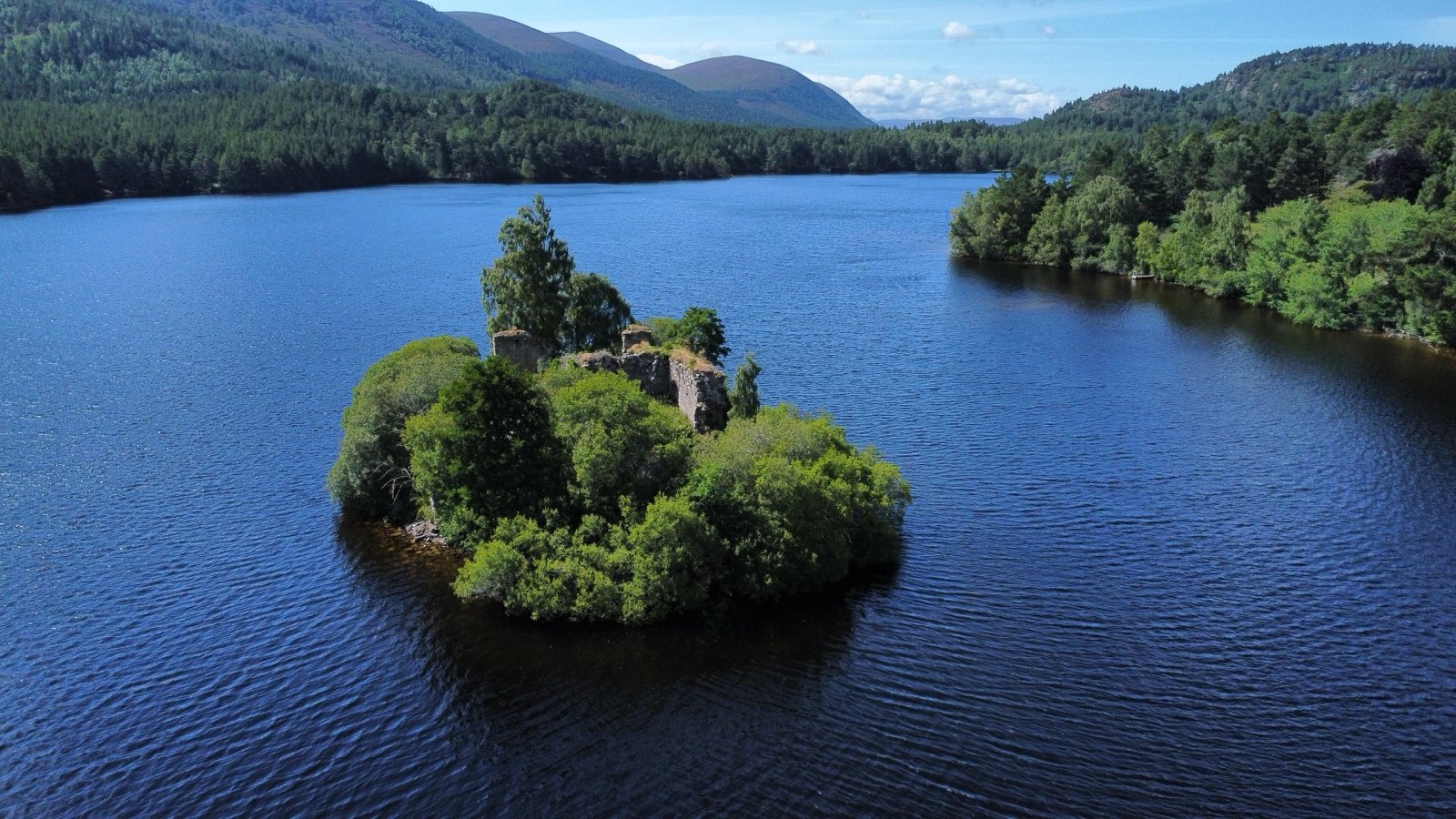
The UK’s largest national park, 4,528 km² around an arctic plateau above 1,000 m: four of the UK’s five highest mountains, Caledonian pinewoods, capercaillie and the highest public road in Britain.
- 1,748 mi²Area
- 2003Established
- 2.6 millionVisitors in 2025
At a glance
- The UK’s largest national park: 4,528 km², 6% of Scotland’s land
- Home to four of the UK’s five highest mountains, with Ben Macdui (1,309 m) second in Britain
- Over 100 local paths, each graded easy, moderate or strenuous and described with its access barriers
- Almost half of the park is classed as wild land
- Wild camping is permitted under Scotland’s access rights, within the Outdoor Access Code
- Fires and barbecues are banned from 1 April to 30 September, with fines of up to £500
Where to stay
Hotels, guesthouses and rentals around Cairngorms National Park
Check availability with our partners
Affiliate links: if you book through them, we earn a commission. The price you pay does not change. How this site is funded
Nearby villages and towns
AviemoreClosest
10 mi as the crow flies
See hotelsBraemar
11 mi as the crow flies
See hotelsBallater
24 mi as the crow flies
See hotels
Larger cities further away
Inverness
35 mi as the crow flies
See hotels
How the visit runs
Aviemore and Strathspey
The Highland Main Line stops at Blair Atholl, Dalwhinnie, Newtonmore, Kingussie, Aviemore and Carrbridge. From Aviemore town centre, the Aviemore Adventurer bus runs to Cairngorm Mountain seven days a week, with room for bikes and skis, and the Strathspey Steam Railway runs on to Boat of Garten and Broomhill.
Glenmore and Meall a’ Bhuachaille
The park recommends Meall a’ Bhuachaille as a first hill walk: good paths and a 360° view over the Abernethy reserve, Loch Morlich, Glenmore forest and An Lochan Uaine. The area was hit by the summer 2026 wildfire, so check the park’s alerts first.
Uath Lochans and Kincraig
Two classic viewpoints near Aviemore: the small forest-ringed lochs of Uath Lochans, and Kincraig, where the Spey leaves Loch Insh.
Deeside: Loch Muick and Burn O’Vat
South-west of Ballater, on the Balmoral estate, Loch Muick has a paid car park, toilets and a small visitor centre. In the Muir of Dinnet reserve, Burn O’Vat is a bowl of pink granite scooped out by a river under the glaciers about 20,000 years ago.
Braemar and Newtonmore by road
Two drives, or bike rides, the park singles out: from Braemar to the Linn of Dee, and from Newtonmore to the Centre of Scotland Stone.
The SnowRoads scenic route about 145 km
From Blairgowrie to Grantown-on-Spey over the highest public road in Britain, through Braemar, Ballater and Tomintoul, with three art installations along the way. Check the weather before setting out.
Tomintoul and Glenlivet after dark
The Cairngorms Dark Sky Park covers the Tomintoul and Glenlivet area, one of the best places in the park for the night sky, with an occasional aurora.
Cairngorms calendar: dates that change your plans
| Period | What applies |
|---|---|
| Since 1 January 2026 | Most drone operators need a CAA Flyer ID |
| 1 April to 30 September | Fire byelaw: fires and barbecues banned, fines of up to £500 |
| April to August | Bird breeding season (usually April to August): dogs on a short lead or close to heel |
| 12 August to 10 December | Grouse shooting on the moors |
| Autumn and winter | Pheasant shooting in the woods |
Source: Cairngorms National Park Authority, FAQ, fire byelaw and dog walking pages (2026).
Stoves and fires during the Cairngorms fire ban
| Equipment or place | From 1 April to 30 September |
|---|---|
| Gas or liquid-fuel stove, methylated spirits, solid fuel blocks | Allowed |
| Wood or charcoal stove | Banned |
| Metal or mesh fire pit, fire bowl | Banned |
| Stove inside a bothy | Allowed; no fire outside |
| Registered campsite | Not covered by the byelaw: follow the site’s own rules |
| Private garden | Not covered by the byelaw |
Source: Cairngorms National Park Fire Management Byelaw (2025), park guidance read in 2026.
Before you go
- Fire: from 1 April to 30 September, fires and barbecues are banned across the park. Gas and liquid-fuel stoves are fine; wood or charcoal stoves, fire pits and braziers are not. Registered campsites and private gardens are not covered by the byelaw. Outside the ban period the park still asks you never to light a fire.
- Wild camping: in small numbers, for two or three nights at most in one spot, with everything carried on your back, away from fields, buildings, roads and historic sites. If a place is busy, move on.
- Toilets: carry a trowel, go at least 30 m from lochs, rivers and streams, bury the waste, replace the turf and take the paper home.
- Dogs are welcome, on a short lead or close to heel, above all from April to August near ground-nesting birds and livestock.
- Capercaillie: disturbing breeding birds, on purpose or recklessly, is a wildlife crime; birdwatchers and photographers are asked not to go looking for them.
- Drones are not covered by access rights: ask the landowner first. Since 1 January 2026 most operators must register with the CAA and pass a theory test for a Flyer ID.
- E-scooters, hoverboards, e-foils and paddleboard motors are banned in the countryside and on public roads; e-bikes count as bicycles.
- Shooting seasons: grouse are shot on the moors from 12 August to 10 December, pheasants in the woods in autumn and winter. Have a back-up route.
- Emergencies: dial 999 and ask for the police, ambulance, mountain rescue or fire service; give a six-figure grid reference or What3Words location, the number of casualties and a contact number.
What is allowed
| Topic | Rule | Source |
|---|---|---|
| Wild camping (bivouac) | Allowed | Cairngorms National Park Authority |
| Fires | Restricted | Cairngorms National Park Authority |
| Fires | Not allowedApril to September | Cairngorms National Park Authority |
| Dogs | Restricted | Cairngorms National Park Authority |
| Drones | Restricted | Cairngorms National Park Authority |
| Swimming | Allowed | Cairngorms National Park Authority |
| Cycling | Allowed | Cairngorms National Park Authority |
| Motor vehicles | Not allowed | Cairngorms National Park Authority |
| Picking plants | Allowed | Cairngorms National Park Authority |
Rules checked with the site manager on October 8, 2026. They can change at short notice: check before you go.
How to get there
Cairngorms National ParkGateway towns
- Ballaterabout 13 kmCairngorms National Park
South-west to Loch Muick on the Balmoral estate: paid car park, toilets and a small visitor centre.
- Blairgowrieabout 145 kmCairngorms National Park
The SnowRoads scenic route to Grantown-on-Spey, over the highest public road in Britain and through Braemar, Ballater and Tomintoul.
In Gaelic the Cairngorms are Am Monadh Ruadh, the red hills. Their heart is a plateau above 3,281 ft, part of the largest area of high ground in the UK, and it is described as the country’s most extensive arctic area in climate, landforms and wildlife. Winters are extreme, with avalanches, and summer storms can bring flash floods.
Above the tree line on the plateau
Trees give way to open ground at a modest height:
- At Invereshie, Scots pines and junipers grow stunted up to 2,133 ft, a natural tree line.
- Around Glenmore, where grazing pressure from deer has eased, young pines are seeding themselves up towards 2,625 ft.
Higher still lives the plateau fauna:
- Ptarmigan and snow buntings in winter;
- dotterel in summer;
- golden eagles and mountain hares on the high ground.
The park warns that this landscape, spectacular as it is, can be treacherous, with challenging terrain and unpredictable weather.
Caledonian pinewoods and four salmon rivers
The park holds nine National Nature Reserves and the sources of four salmon rivers:
- the Spey
- the Dee
- the Tay
- the South Esk
Its pinewoods are remnants of the Caledonian forest that once covered 17% of Scotland; the stretch from Glen Feshie to Abernethy is the largest that survives, and the park as a whole keeps more than half of what is left.
The park shelters 25% of the UK’s rarest and most endangered species, among them:
- red squirrels
- crossbills
- capercaillie
- the Scottish wildcat
It is also home to the only herd of semi-domesticated reindeer in the British Isles, about 150 animals, brought in by a Swedish herder in 1952.
Cup marks, bothies and the 1961 chairlift
The oldest traces are carved in stone, and the story runs on to the park itself:
- More than 4,000 years ago: Neolithic cup and ring marks at Laggan, at the Highland Folk Museum in Newtonmore and at Sluggan.
- Bronze Age: the axe that turned up on Granish Moor, near Aviemore, in 1982.
- 1st to 10th century: the Picts rule the region.
- 19th century: the bothies, first built to shelter drovers, are renovated for deer stalkers, and Queen Victoria settles at Balmoral, which sets off tourism.
- 1890s: skiing begins.
- 1961: Cairngorm Mountain opens a chairlift and Aviemore becomes the region’s first established ski resort; The Lecht and Glenshee follow.
- 2003: the national park is founded, the second in Scotland after Loch Lomond.
- 4 October 2010: it is extended into Perth and Kinross to take in Blair Atholl and Spittal of Glenshee.
Cairns mark the summits, and the largest, Prince Albert’s cairn, known as Scotland’s Pyramid, stands on the Balmoral estate. Nine Highland Games are still held in the region every year.
The park in figures
- Around 18,000 residents.
- 2.6 million tourism visits estimated for 2025, a tourism model rather than a count of entries.
- 5.0 million visitor days and nights in the same year.
Frequently asked questions
Can you wild camp in the Cairngorms National Park?
Yes, within the Scottish Outdoor Access Code: a small tent, a small group, two or three nights at most in one place, no fire and no trace left behind. Campervans go to campsites or designated overnight parking areas.
Can you have a campfire or barbecue in the Cairngorms?
No, not from 1 April to 30 September, when the park’s fire byelaw bans them, with fines of up to £500. Outside that period the park says there is almost nowhere suitable for a fire.
How do you get to the Cairngorms by train?
On the Highland Main Line, which stops at Blair Atholl, Dalwhinnie, Newtonmore, Kingussie, Aviemore and Carrbridge. Regular buses also come from London, Edinburgh, Glasgow, Aberdeen and Inverness.
Are dogs allowed in the Cairngorms National Park?
Yes. Keep them on a short lead or close to heel, above all from April to August near ground-nesting birds and livestock, and pick up after them.
Can you swim in the lochs of the Cairngorms?
Yes. Many lochs and rivers are used for wild swimming, canoeing and paddleboarding, but the water is cold and some lochs have conservation zones or seasonal restrictions. A buoyancy aid is recommended for water sports.
Can you fly a drone in the Cairngorms National Park?
Only with the landowner’s permission, as recreational drones are not covered by access rights. Since 1 January 2026 most operators must also hold a CAA Flyer ID.
Is Glenmore open after the 2026 wildfire?
In part, according to the park’s and Forestry and Land Scotland’s alerts when this page was checked in October 2026: the Ryvoan path, the Meall a’ Bhuachaille circuit and Ryvoan bothy had reopened, while the right of way beyond the bothy towards Nethy Bridge, an area of Glenmore and the Allt Mor car park were still closed. Check the park’s alerts for the current situation.
Other protected areas nearby
Sources
5 sources
- Cairngorms National Park Authority consulted on October 19, 2026
- OpenStreetMap consulted on October 8, 2026
- Wikidata consulted on October 8, 2026
- Wikipedia consulted on October 8, 2026
- Wikipedia EN consulted on October 8, 2026