

Lake District National Park
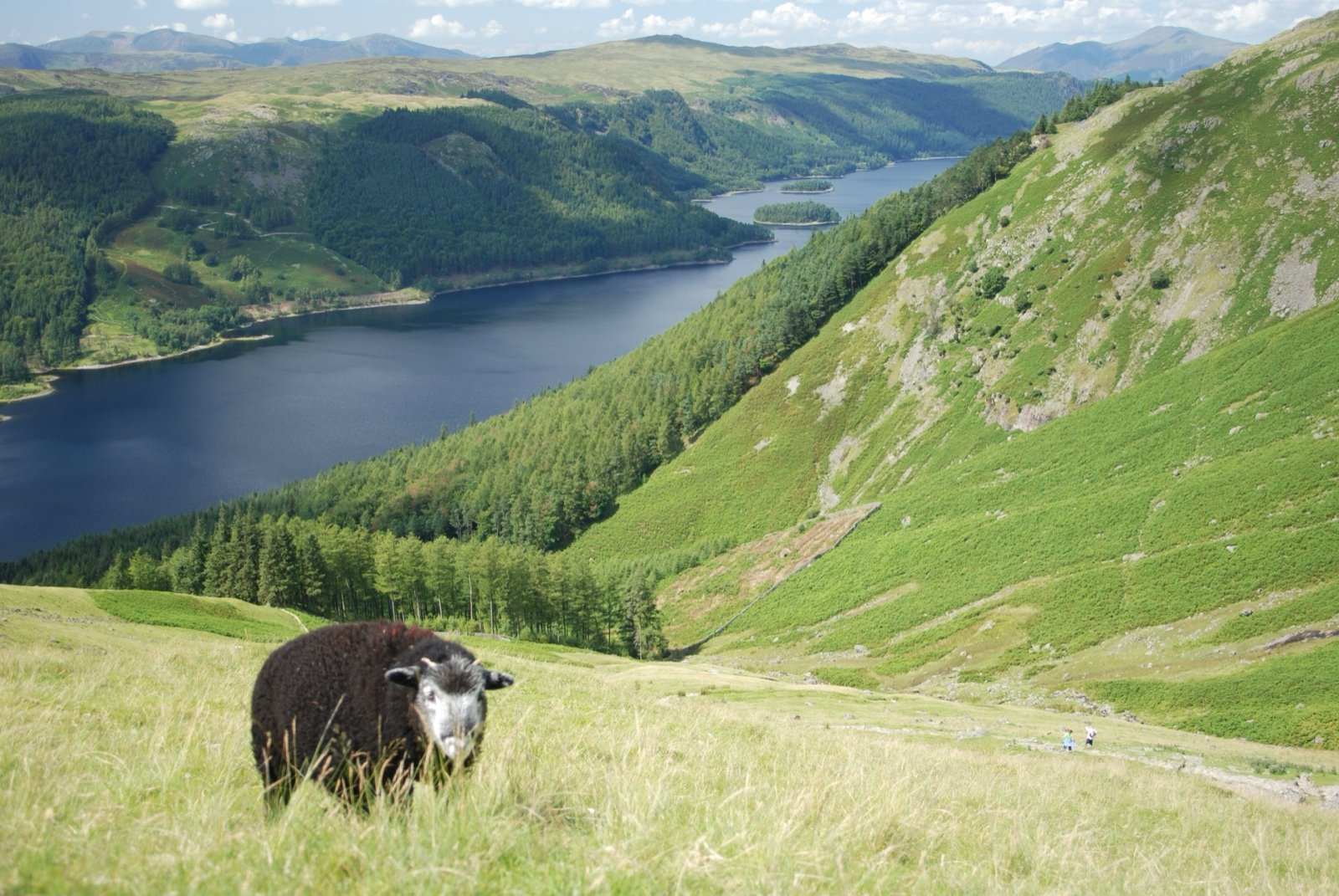
England’s largest national park, around Scafell Pike (978 m) and Wastwater: more than 350 fells, 16 bodies of water and a sheep-farmed valley landscape on the World Heritage List since 2017.
- 912 mi²Area
- 3,209 ftElevation
- 1951Established
- 17.5 millionVisitors in 2025
At a glance
- England’s largest national park: 2,362 km², 58 km from west to east and 64 km from north to south
- Scafell Pike, 978 m, England’s highest mountain, among more than 350 fells
- Wastwater, 74 m deep, is England’s deepest lake; Windermere, 17 km long, its longest
- On the UNESCO World Heritage List since 2017, for its farmed landscape
- Open all day, every day: no gates, barriers or official entrance points
- Driest from March to June; the wettest months run from October to January
Where to stay
Hotels, guesthouses and rentals around Lake District National Park
Check availability with our partners
Affiliate links: if you book through them, we earn a commission. The price you pay does not change. How this site is funded
WindermereClosest
9.3 mi as the crow flies
See hotelsKeswick
11 mi as the crow flies
See hotelsKendal
17 mi as the crow flies
See hotels
How the visit runs
By train to Windermere
A direct train runs from Manchester to Windermere, and local trains from Oxenholme, near Kendal, call at Kendal, Staveley and Windermere. Oxenholme, Penrith and Carlisle sit on the West Coast Main Line, east of the park, with trains from London and Glasgow.
Through the central lakes by bus
The 555 runs through the heart of the park and the 599 links Bowness and Grasmere. Single bus fares were capped at £3 as displayed in October 2026.
Keswick and the north
From Penrith, the X4/5 serves Keswick, Cockermouth and Workington. At Keswick, passenger boats with several stops sail on Derwentwater.
The western and central valleys by shuttle
A summer shuttle reaches Wasdale from Ravenglass, and the Buttermere shuttle runs from May to September. In 2026 a Coniston and Ambleside service ran to Little Langdale at weekends until 29 August.
Ullswater, Windermere and Coniston by boat
Passenger boats call at several stops on Ullswater, Windermere and Coniston. A community shuttle bus links Aira Force, Pooley Bridge and Howtown; the Authority announced it would run again from Easter. The Windermere ferry carries cars and foot passengers towards Hawkshead.
Six Lake District waters compared
| Water | What sets it apart | Passenger boats | Rules on the water |
|---|---|---|---|
| Windermere | England’s longest lake, 17 km; a ferry carries cars and foot passengers towards Hawkshead | Yes, several stops | Every powered boat needs a current Windermere Registration |
| Ullswater | Yes, several stops | Its own byelaws | |
| Coniston Water | Yes, several stops | Its own byelaws | |
| Derwentwater | Yes, several stops | Its own byelaws | |
| Bassenthwaite Lake | The only official “lake”; a National Nature Reserve | Permit needed for boating and fishing | |
| Wastwater | England’s deepest lake, 74 m |
Source: Lake District National Park Authority, facts and figures, getting around and lakes pages (2026).
The Lake District year, season by season
| Period | What changes |
|---|---|
| March to June | The driest period of the year |
| Easter to October | Free volunteer-led guided walks, groups of up to 20 |
| May to September | The Buttermere shuttle runs |
| October to January | The wettest months |
| November to March | Snow can fall |
| December to April | Daily Weatherline report from the summit of Helvellyn |
Source: Lake District National Park Authority, weather, FAQ and getting around pages (2026).
Before you go
- Wild camping is not a right: it is normally tolerated for one night if you leave no trace and pitch above the highest fell wall, and a landowner can ask you to move on.
- Where to pitch: well away from towns, villages and lake shores, with one or two tents at most; go to the toilet at least 30 m from water and take all rubbish home.
- Car parks and verges: camping there is not allowed at any time, and campervans should stay on designated sites.
- Fires and barbecues are not permitted in the park, unless stated on private land.
- Dogs must be on a lead anywhere livestock may be; if cows come towards you, let go of the lead. Pick up after your dog.
- Parking: car parks are run by several organisations at varying rates, and some take no cards because there is no internet connection, so carry coins.
- Weather: the Authority warns of four seasons in one day; the valleys get around 200 days of rain and 20 days of snow a year.
- Waymarks: a yellow arrow means walkers only; a blue arrow means walkers, horse riders and cyclists.
- Step-free walks: the Miles without Stiles network lists 50 easy-access routes for wheelchairs, pushchairs and walkers with limited mobility.
What is allowed
| Topic | Rule | Source |
|---|---|---|
| Wild camping (bivouac) | Restricted | Lake District National Park Authority |
| Camping | Not allowed | Lake District National Park Authority |
| Fires | Not allowed | Lake District National Park Authority |
| Dogs | Restricted | Lake District National Park Authority |
Rules checked with the site manager on October 8, 2026. They can change at short notice: check before you go.
When to go
- Best time to visit March to June
How to get there
Lake District National ParkGateway towns
In 2017 UNESCO listed the Lake District as a cultural landscape: a dramatic farmed landscape, shaped by Herdwick sheep farming, that went on to inspire the worldwide conservation movement. The national park itself dates from 1951. It is a lived-in place, with 38,993 residents at the 2021 census, and the 2011 census found that 24% of homes were second or holiday homes.
Herdwick farms, Wordsworth and a Roman fort
People have shaped these valleys for a long time, and three landmarks trace the story before the park:
- Hardknott fort, the best-preserved Roman fort in Cumbria south of Hadrian’s Wall.
- 1810: William Wordsworth publishes his Guide to the Lakes.
- 1847: the Kendal and Windermere railway reaches Windermere.
Those visitors never stopped coming. Nobody pays to enter, so there are no ticket counts behind the National Park Authority’s figures for 2025:
- 17.45 million tourists;
- 29.55 million tourist days (stays of more than three hours);
- £1.784 billion of direct spending.
Woodland covers 13% of the park, and the target is 17% by 2050.
Fells, meres and 26 mi of coast
The park counts at least 200 fell tops, and over 350 fells in all. The guidebook writer Alfred Wainwright described 214 of them, now known as the Wainwrights. The four highest are:
- Scafell Pike, 3,209 ft
- Scafell, 3,163 ft
- Helvellyn, 3,117 ft
- Skiddaw, 3,054 ft
Beyond the fells and the lakes, the park also reaches the sea, with 26 mi of coastline and estuaries inside its boundary.
Seathwaite, the wettest inhabited place in England
Rainfall varies a great deal within the park. Each year:
- Ambleside gets 2,103 mm of rain;
- Seathwaite gets 3,552 mm;
- Sprinkling Tarn gets about 5,000 mm.
Two storms stand out in the record:
- November 2009: 314.4 mm fell on Seathwaite in 24 hours, a record for England, and Cockermouth and Keswick were flooded.
- December 2015: Storm Desmond brought record-breaking rainfall across Cumbria.
Boats, byelaws and Bassenthwaite
Four lakes are open to navigation, each with its own byelaws:
- Windermere
- Derwentwater
- Ullswater
- Coniston Water
On Windermere, every powered boat, in use or moored, private or commercial, needs a current Windermere Registration. Bassenthwaite Lake is a different case. As a National Nature Reserve it has special protection, and both boating and fishing there need a permit.
Frequently asked questions
Is there an entrance fee for the Lake District National Park?
No. The park is open all day, every day, with no gates, barriers or official entrance points. Car parks charge, at rates that vary from one operator to the next.
Can you wild camp in the Lake District?
There is no right to wild camp, but it is normally tolerated for one night above the highest fell wall, away from villages and lake shores, if you leave no trace. Camping in car parks or on roadside verges is never allowed.
What is the highest mountain in the Lake District?
Scafell Pike, at 978 m, which is also the highest mountain in England. Scafell (964 m), Helvellyn (950 m) and Skiddaw (931 m) follow.
How many lakes are in the Lake District?
The park has 16 bodies of water, but only one is officially a lake: Bassenthwaite Lake. The others, Windermere and Ullswater among them, are meres or waters.
Can you visit the Lake District without a car?
Yes. Trains run to Windermere, buses such as the 555, 599 and X4/5 cover the main valleys, shuttles serve Wasdale and Buttermere in season, and boats sail on four lakes. The Cumbria Travel Pass covers trains, buses and Windermere Cruises boats.
When is the best time to visit the Lake District?
March to June is the driest period. October to January is the wettest, and snow can fall from November to March.
Are dogs allowed in the Lake District National Park?
Yes, but they must be on a lead anywhere there may be livestock, and kept under close control elsewhere. Owners must pick up after them.
Are there free guided walks in the Lake District?
Yes. The National Park Authority runs volunteer-led guided walks from Easter to October each year, for groups of up to 20 people.
Other protected areas nearby
Sources
4 sources
- Lake District National Park Authority consulted on October 8, 2026
- OpenStreetMap consulted on October 8, 2026
- Wikidata consulted on October 8, 2026
- Wikipedia consulted on October 8, 2026