
Calanques National Park
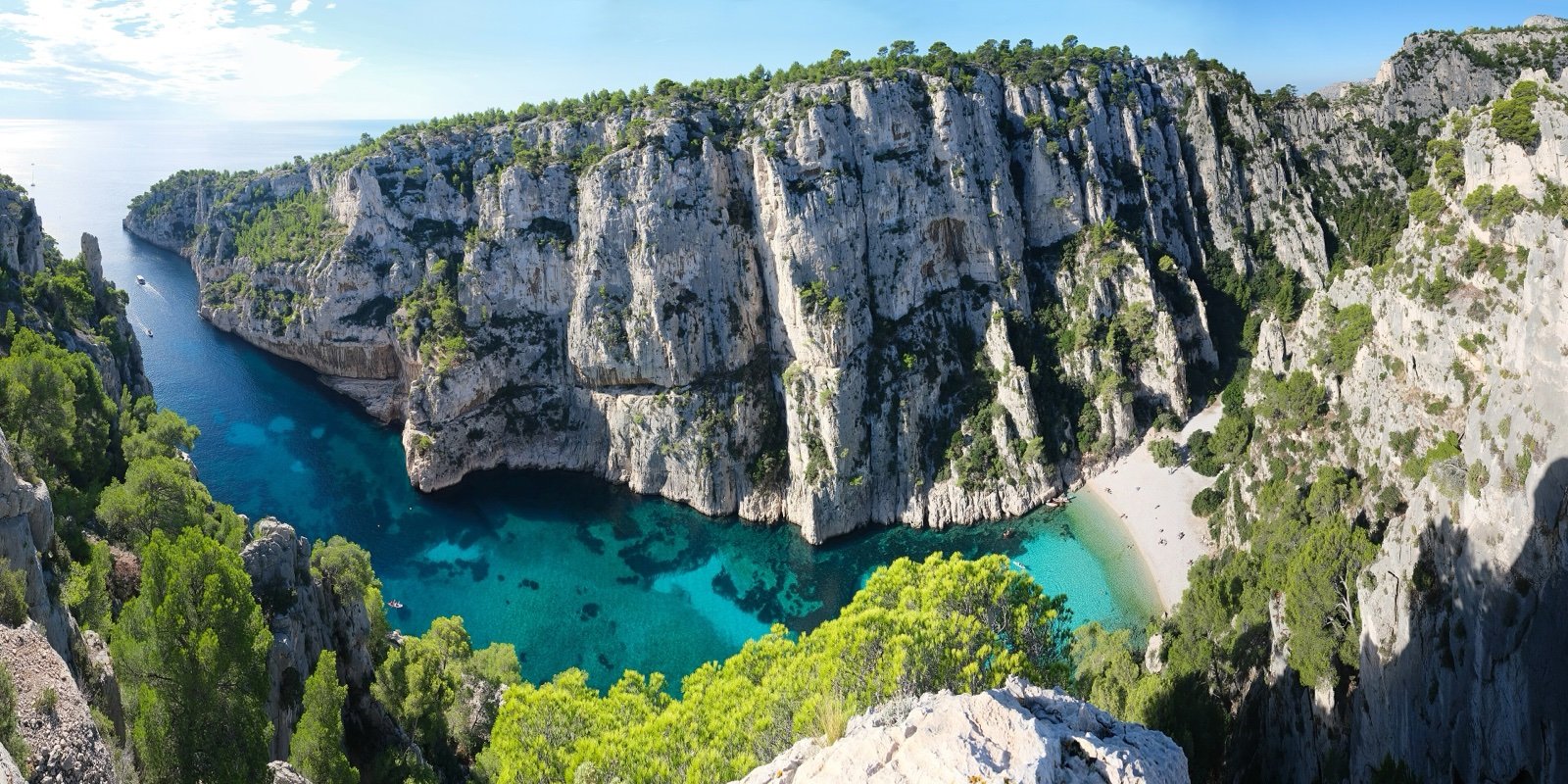
White limestone coves between Marseille and Cassis, reached on foot by long, often difficult paths, with summer access ruled by fire risk and a free booking scheme at Sugiton.
- 201 mi²Area
- 2012Established
At a glance
- The only peri-urban national park in Europe, shared by Marseille, Cassis and La Ciotat
- Mainland, island and marine at once, unique in the Mediterranean: the sea is 90% of the core
- Walking is always required to reach the best-known coves, often on a long, difficult path
- Open day and night all year, except on red fire-risk days from 1 June to 30 September
- A free booking for Sugiton and Pierres Tombées on set summer dates, until 2027
- No drinking water, toilets, shops or bins on the paths or the beaches
Where to stay
Hotels, guesthouses and rentals around Calanques National Park
Check availability with our partners
Affiliate links: if you book through them, we earn a commission. The price you pay does not change. How this site is funded
CassisClosest
4.3 mi as the crow flies
See hotelsMarseille
6.8 mi as the crow flies
See hotelsLa Ciotat
8.1 mi as the crow flies
See hotels
How the visit runs
Marseilleveyre
The western end of the park, reached from Marseille, with Les Goudes and Callelongue. The Callelongue road is closed to cars by day in summer, when RTM buses run to the trailheads.
Luminy
The sector for Sormiou, Morgiou and Sugiton. Sormiou has lifeguards in summer; Sugiton needs a free booking on set dates.
Col de la Gardiole
The gateway to En-Vau and Port-Pin, through the Gardiole state forest. Both coves are small, hard to reach and have no facilities.
Cassis and Cap Canaille
Cassis has a single calanque within its boundaries, but its harbour is well placed for the coves to the west and Cap Canaille to the east, with Figuerolles and the Mugel. The Route des Crêtes closes on red days.
Summer 2026 in the Calanques: dates that change access
| Dates in 2026 | What applies |
|---|---|
| 1 June to 30 September | Access to the massifs set every evening at 6pm for the next day, according to fire risk |
| 5, 6 and 7 June | Sormiou, Morgiou and Callelongue roads closed to cars, 7am to 7pm |
| 12 June to 30 August | The same three roads closed to cars every day, 7am to 7pm |
| Saturdays and Sundays in September | Morgiou and Sormiou roads closed to cars, 7am to 7pm |
| 20 and 21 June, 27 June to 30 August, 5, 6, 12 and 13 September | Free booking required for Sugiton and the Pierres Tombées |
Source: Parc national des Calanques, access, regulations and Sugiton booking pages (2026).
Before you go
- Fire risk: from 1 June to 30 September, the prefecture sets the next day’s access at 6pm. Check it in the Mes Calanques app.
- Water: at least 1.5 litres per person for half a day, twice that for a longer outing or in hot weather.
- Walking boots are strongly recommended; open shoes are not suitable for the paths.
- Rubbish goes back out in your bag: there are no bins in the park.
- Sugiton booking: opens three days ahead at 9am, closes the day before at 6pm, five people at most. Show the confirmation e-mail on arrival.
- Getting there: the park authority recommends public transport, as traffic and parking around the Calanques are difficult.
- Dogs are allowed on a lead, but banned on the Riou archipelago.
- Drones: motorised overflight below 1,000 metres, drones included, is forbidden.
What is allowed
| Topic | Rule | Source |
|---|---|---|
| Wild camping (bivouac) | Not allowed | Parc national des Calanques |
| Camping | Not allowed | Parc national des Calanques |
| Fires | Not allowed | Parc national des Calanques |
| Dogs | Restricted | Parc national des Calanques |
| Drones | Not allowed | Parc national des Calanques |
| Cycling | Restricted | Parc national des Calanques |
| Motor vehicles | Restricted | Parc national des Calanques |
| Picking plants | Restricted | Parc national des Calanques |
| Visitor quota | Booking requiredJune to September | Parc national des Calanques |
Rules checked with the site manager on September 29, 2026. They can change at short notice: check before you go.
When to go
- Access restricted on some days June to September
How to get there
Calanques National ParkGateway towns
In Provençal, a calanque is a cove hemmed in by steep slopes. The park named after them is France’s tenth national park, and its authority counts 2 to 3 million visitors a year, on land and at sea.
From early campaigns to the 2012 decree
Protection of the massif came in steps:
- In the early twentieth century, campaigns to defend the massif begin.
- In 1975, the massif between Marseille and Cassis is listed under the 1930 landscape law.
- On 18 April 2012, a decree of the Prime Minister creates the national park.
Urgonian white, dolomite and ochre: three massifs
The park takes in three limestone massifs, each with its own colour:
- The Calanques massif proper: white Urgonian limestone, compact, hard and packed with fossils.
- The Saint-Cyr massif: dolomitic limestone, with the highest point of the park, Mont Carpiagne at 2,119 ft.
- The Canaille massif to the east: limestone, sandstone and puddingstone, its ochre red standing out against the bright white of the Marseille calanques.
These rocks began as sediment on the floor of a tropical sea during the Mesozoic. Karst erosion has since carved them out:
- caves, sinkholes and underground rivers inland;
- offshore, the Cassidaigne submarine canyon, which drops to more than 1,500 metres.
The Cosquer cave, out of reach
The Cosquer cave holds negative hand stencils some 27,000 years old. Its only entrance is a walled-up passage 35 metres under the sea, so it cannot be visited.
- The park authority lists the Cosquer cave, the grotte du Figuier, the grotte du Renard and the grotte de la Triperie among its classified historic monuments.
- The Mugel park is listed as a remarkable garden.
Sugiton, or what peaks of 2,500 visitors a day do to a pine wood
The park authority presents the Calanques as a hiking territory first, and warns that the photographs of the best-known coves can mislead: in summer they are crowded and the walk in becomes hard work. Swimmers who only want a beach are sent to the town beaches of Marseille, Cassis and La Ciotat.
In spring and summer, the authority names the places most overrun:
- the calanques of Marseilleveyre, Sormiou, Sugiton, En-Vau and Port-Pin;
- the Frioul islands.
Sugiton shows the cost of that popularity. Peaks of 2,500 visitors a day caused heavy erosion that has laid bare the roots of the pine wood. The authority first tried a booking scheme there and at the Pierres Tombées in 2022.
Riou, Frioul and the marine core
Most of the protected core lies at sea, and the islands off Marseille have their own rules:
- On the Riou archipelago, landing is forbidden except between sunrise and sunset on the north-west and west coast, between the Monastério and Boulegeade coves.
- Dogs and vehicles are banned on Riou.
- On the Frioul islands, cycling is allowed only in the village area and on the road to the Caroline hospital.
Currents, cliffs and rescue calls
Every year, visitors in the Calanques have to call the emergency services, and some accidents are serious, occasionally fatal. The authority points to the sea as much as to the paths:
- Along the southern coast of Marseille, from Mont Rose to Cap Croisette and Les Goudes, the currents are unpredictable.
- Underground springs keep the water in the coves often cold.
- For the day’s access and conditions, the Mes Calanques app and the park authority are the references.
Frequently asked questions
Do you need to book to visit the Calanques?
Only for Sugiton and Pierres Tombées, on set dates: in 2026, 20 and 21 June, every day from 27 June to 30 August, and 5, 6, 12 and 13 September. The booking is free, and a fire-risk closure cancels it without carry-over.
Are the Calanques closed in summer?
Only on red days. From 1 June to 30 September, the prefecture decides at 6pm for the next day; on a red day, entering the park by land is forbidden.
Can you drive to the Calanques?
Not to every cove in summer. In 2026 the Sormiou, Morgiou and Callelongue roads are closed to cars from 7am to 7pm on 5, 6 and 7 June and every day from 12 June to 30 August, plus September weekends for Morgiou and Sormiou. RTM buses 20, 22 and 23 then run to the trailheads.
Can you swim in the Calanques?
Yes, but only Sormiou and Saint-Estève have lifeguards in summer. The water is often cold because of underground springs, and currents are unpredictable on Marseille’s southern coast.
Are dogs allowed in the Calanques?
Yes, on a lead. They are banned on the Riou archipelago.
When is the best time to visit the Calanques?
Autumn or winter, outside weekends and school holidays, according to the park authority. Spring and summer are the busiest seasons.
Can you see the Calanques by boat?
Yes, with approved cruise companies, identified by a sticker and an orange flag; only rental firms with a green sticker may hire out motorboats. On a red day the boat trip is still possible, but landing is strictly forbidden.
Can you visit the Cosquer cave?
No. Its only entrance is a walled-up passage 35 metres under the sea.
Other protected areas nearby
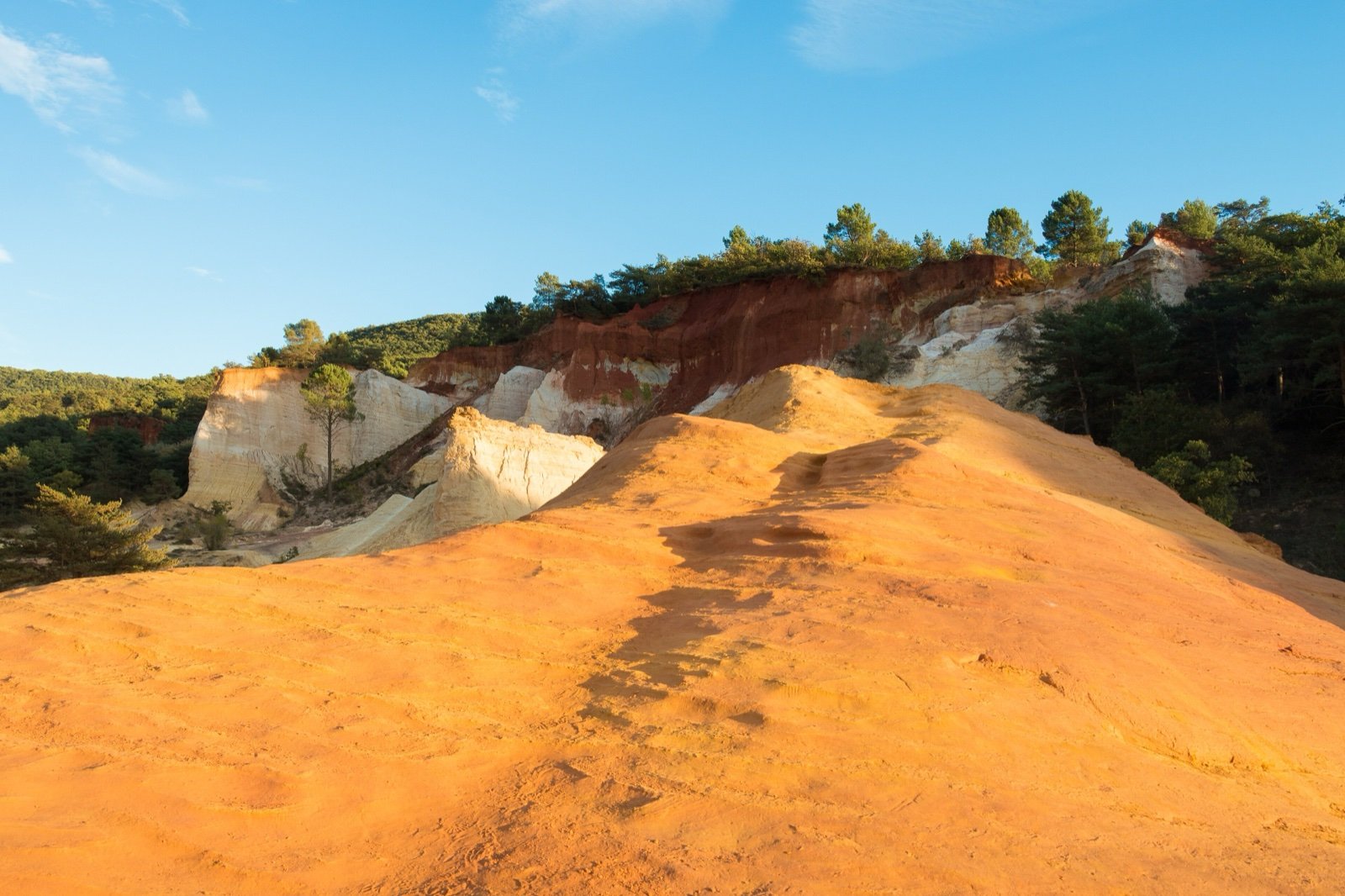
Luberon Regional Nature Park
28 fossil sites in a UNESCO Geopark of perched villages and ochre cliffs.46 mi awayRegional nature park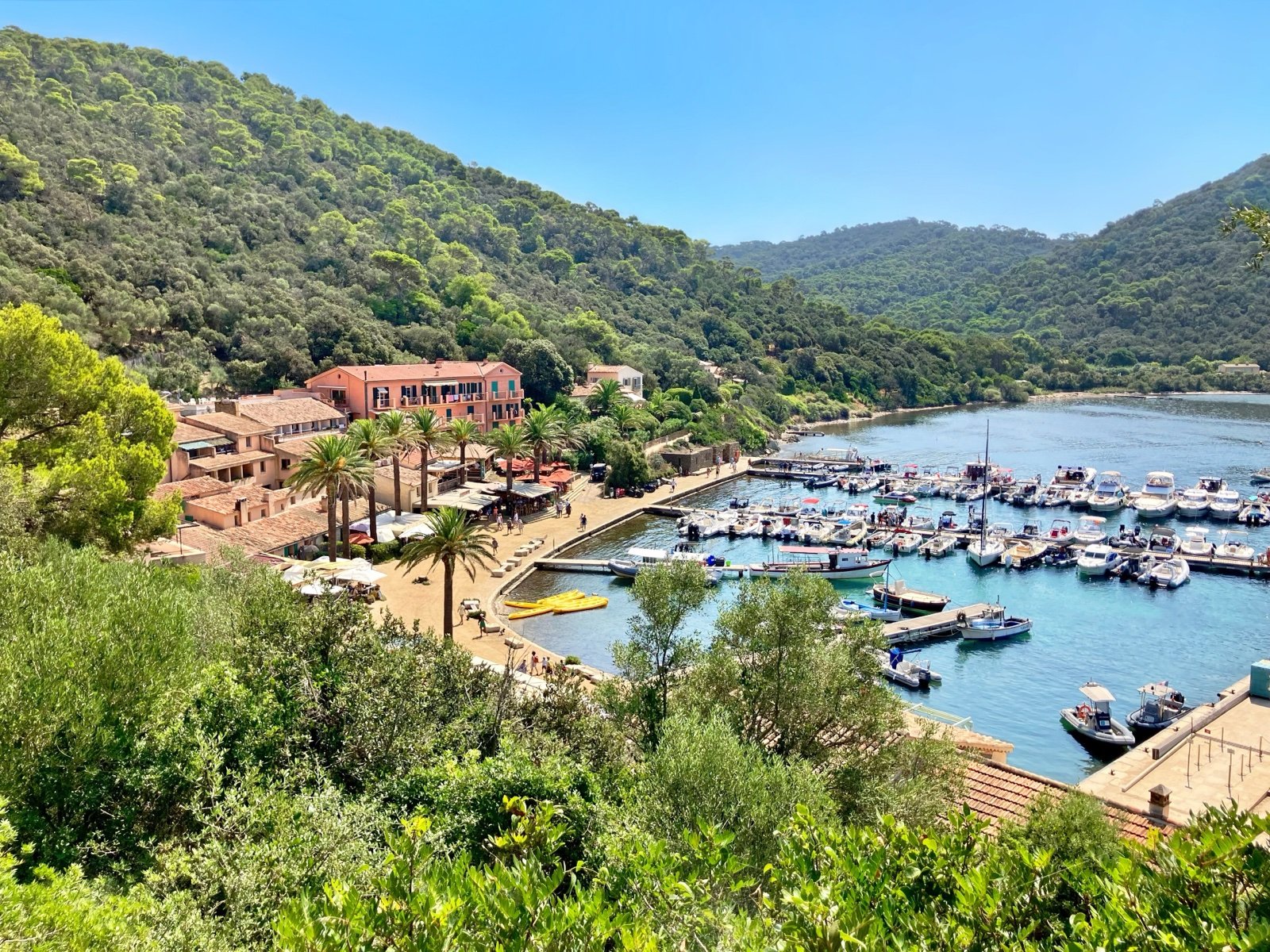
Port-Cros National Park
1,969 ft of protected sea around Port-Cros and Porquerolles.50 mi awayNational park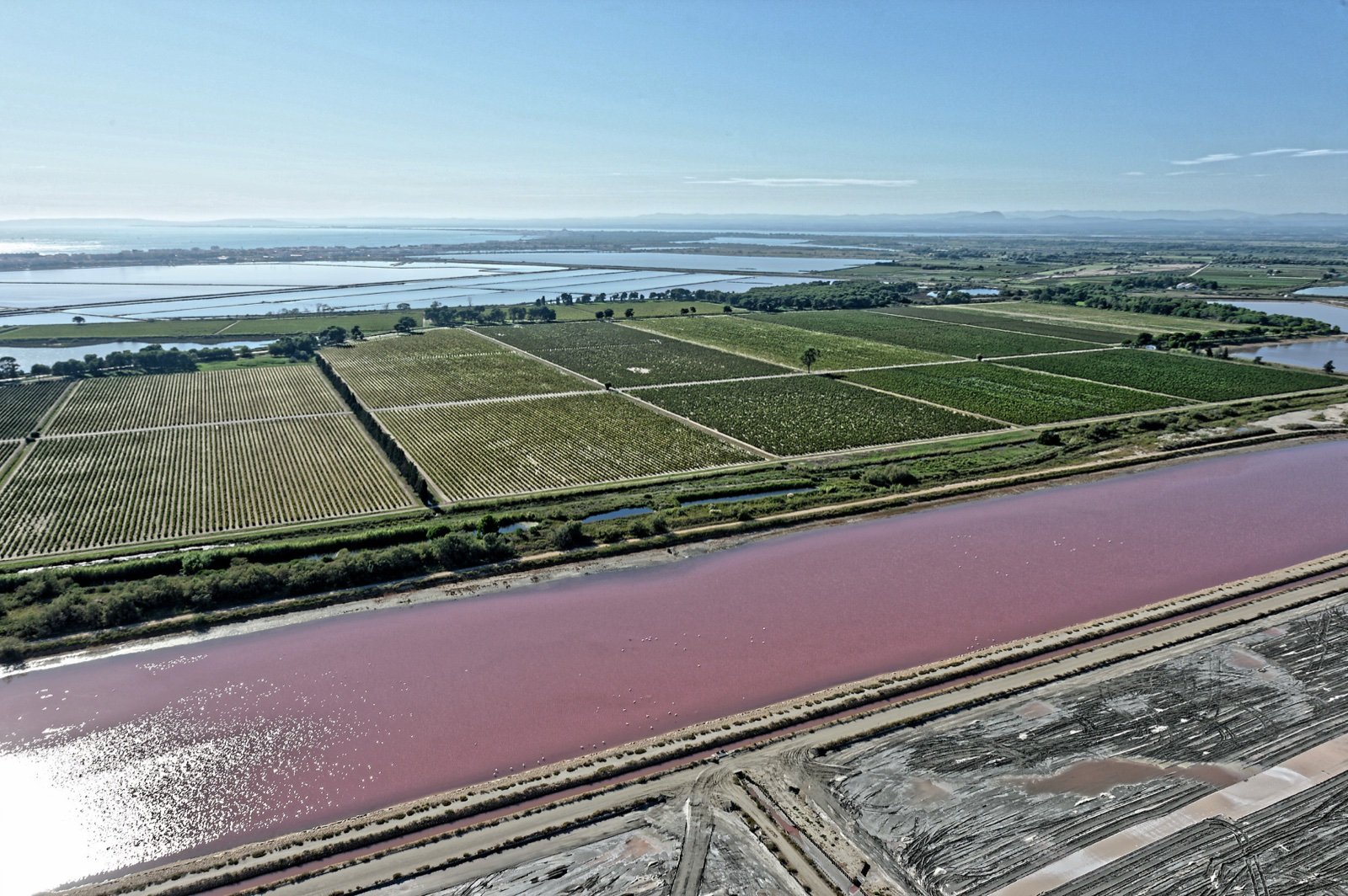
Parc naturel régional de Camargue
150,000 birds a year fly over lagoons, rice fields, bulls and horses.51 mi awayRegional nature parkSources
4 sources
- Parc national des Calanques consulted on October 21, 2026
- OpenStreetMap consulted on September 29, 2026
- Wikidata consulted on September 29, 2026
- Wikipedia consulted on October 21, 2026