
Gran Paradiso National Park
Italy’s first national park, created on 3 December 1922 from a royal hunting reserve to save the ibex: five valleys across the Aosta Valley and Piedmont, the Nivolet plateau and more than 500 km of paths.
At a glance
- Italy’s first national park, established on 3 December 1922
- Born to save the ibex, hunted down to a few hundred animals
- On the IUCN Green List since 2014, the only Italian national park selected then
- Five valleys in two regions, the Aosta Valley and Piedmont
- More than 500 km of paths, and the Nivolet plateau at 2,500 m
- In summer 2026, 350 vehicles a day at most on the last stretch of the Nivolet road
Where to stay
Hotels, guesthouses and rentals around Gran Paradiso National Park
Check availability with our partners
Affiliate links: if you book through them, we earn a commission. The price you pay does not change. How this site is funded
Ceresole RealeClosest
6.2 mi as the crow flies
See hotelsCogne
7.5 mi as the crow flies
See hotelsValsavarenche
8.1 mi as the crow flies
See hotelsAosta
16 mi as the crow flies
See hotels
Which tour to choose?
| Tour | Duration | Length |
|---|---|---|
| Rifugio Chabod | 2 h 45 min | 3.6 mi |
| Rifugio Jervis | 2 h | |
| Dégioz - Orvieille - Laghi Djouan | 3 h 15 min | |
| Pont Valsavarenche - Nivolet | 2 h 30 min | |
| Rifugio Vittorio Emanuele II | 2 h 30 min | 3.1 mi |
| Valnontey - Rifugio Vittorio Sella | 2 h 30 min | 3.1 mi |
Facts checked on October 14, 2026
Prices and access
| Shuttle, Everyone | Free |
|---|---|
| Booking, Per vehicle | €10 |
Source: Parco Nazionale Gran Paradiso
How the visit runs
Cogne and Valnontey about 5 km, 2 h 30
The best-known valley. At Valnontey the Paradisia garden flowers from mid-June to mid-September, and the path to the Rifugio Vittorio Sella, the busiest in the park, climbs about 1,000 m.
Valsavarenche, for the huts and the summit 5 km, 2 h 30
From Pont, the path rises 759 m to the Rifugio Vittorio Emanuele II; with the Rifugio Chabod (5.8 km, 2 h 45 from Alpe Pravieux), it is one of the two base huts for the normal route up the Gran Paradiso.
Rhêmes and its nature trail
The valley of the bearded vulture centre. The first section of the nature trail, from Chanavey to Bruil, is paved and suitable for wheelchairs.
Orco valley: Noasca and Ceresole Reale 2 h
The Piedmont side, reached from Turin by the SP 460. From Chiapili Inferiore (1,715 m), above Ceresole Reale, a path climbs 583 m to the Rifugio Jervis.
The Nivolet plateau 2 h 30 on foot from Pont
Reached by the SP 50 from Lake Serrù on the Piedmont side, or on foot from Pont in Valsavarenche, 448 m higher, to the Piani del Nivolet.
Four ways up to the Nivolet plateau in summer 2026
| Option | From | Cost | Booking |
|---|---|---|---|
| Own vehicle with NivoletCard | Lake Serrù, SP 50 | €10 per vehicle, plus fees | Compulsory, 350 vehicles a day at most |
| Park shuttle, booked | Locana, two runs up in the morning, two down in the afternoon | Free | NivoletCard portal, before 18:00 the day before |
| Park shuttle, unbooked | Chiapili Inferiore, Lake Serrù and Nivolet pass car parks | Free | None, while seats last |
| On foot | Pont, Valsavarenche, 2 h 30 and 448 m up | Free | None |
Source: Ente Parco Nazionale Gran Paradiso, Nivolet pages (2026 season, 4 July to 13 September for the shuttles).
The Aosta Valley and Piedmont sides compared
| Side | Valleys | By road | By public transport |
|---|---|---|---|
| Aosta Valley | Cogne, Valsavarenche, Rhêmes | A5 motorway, Aosta-ovest exit | Aosta station, then SAVDA; Svap buses to Cogne, Arriva to Valsavarenche and Rhêmes |
| Piedmont | Orco, Soana | From Turin, SP 460 up the Orco valley; Pont Canavese for the Soana valley | Turin, Ivrea or Pont Canavese stations, then GTT buses |
Source: Ente Parco Nazionale Gran Paradiso, “Come arrivare” page (2026).
Before you go
- NivoletCard: on regulation days, motor vehicles going beyond Lake Serrù need a booking and the €10 card (2026), plus PagoPA fees; it is valid for the day booked, one payment can cover a stay of up to three days, and it is never refunded.
- Book before you climb: mobile internet is absent or too weak at the Serrù; the Chiapili Inferiore car park has an information point with wifi.
- Dogs are banned except on a lead on the valley floors and, from 15 July, on a few designated paths such as Valnontey to the Sella hut.
- Drones are banned over the park whatever the height; amateur filming is never allowed, and a non-recreational exemption costs a €16 revenue stamp, lost even if refused.
- Camping and bivouac with a tent are banned outside equipped areas; a single-night emergency mountaineering bivouac is tolerated away from huts or when they are full.
- Fire is banned throughout the park, and motorhomes may park only in equipped areas.
- Picking: wild berries may be eaten on the spot; mushrooms may not be picked, even inedible ones.
- On the trail: do not take shortcuts off the path or feed wild animals.
- Kit: the park advises trekking shoes, waterproof jacket, fleece, hat, sunglasses, a wool cap, food, drink and binoculars.
What is allowed
| Topic | Rule | Source |
|---|---|---|
| Wild camping (bivouac) | Not allowed | Parco Nazionale Gran Paradiso |
| Camping | Restricted | Parco Nazionale Gran Paradiso |
| Fires | Not allowed | Parco Nazionale Gran Paradiso |
| Dogs | Restricted | Parco Nazionale Gran Paradiso |
| Drones | Not allowed | Parco Nazionale Gran Paradiso |
| Motor vehicles | Restricted | Parco Nazionale Gran Paradiso |
| Picking plants | Not allowed | Parco Nazionale Gran Paradiso |
| Visitor quota | Booking requiredJuly to September | Parco Nazionale Gran Paradiso |
Rules checked with the site manager on October 14, 2026. They can change at short notice: check before you go.
When to go
- Access restricted on some days July to September
How to get there
Gran Paradiso National ParkGateway towns
- Aosta26.5 kmGran Paradiso National Park
To Cogne, gateway to the best-known valley of the park (distance given by English Wikipedia).
- Turin140 kmGran Paradiso National Park
To Cogne (distance given by English Wikipedia).
- Turin114 kmGran Paradiso National Park
To Aosta, the rail and bus hub for the Aosta Valley side (distance given by French Wikipedia).
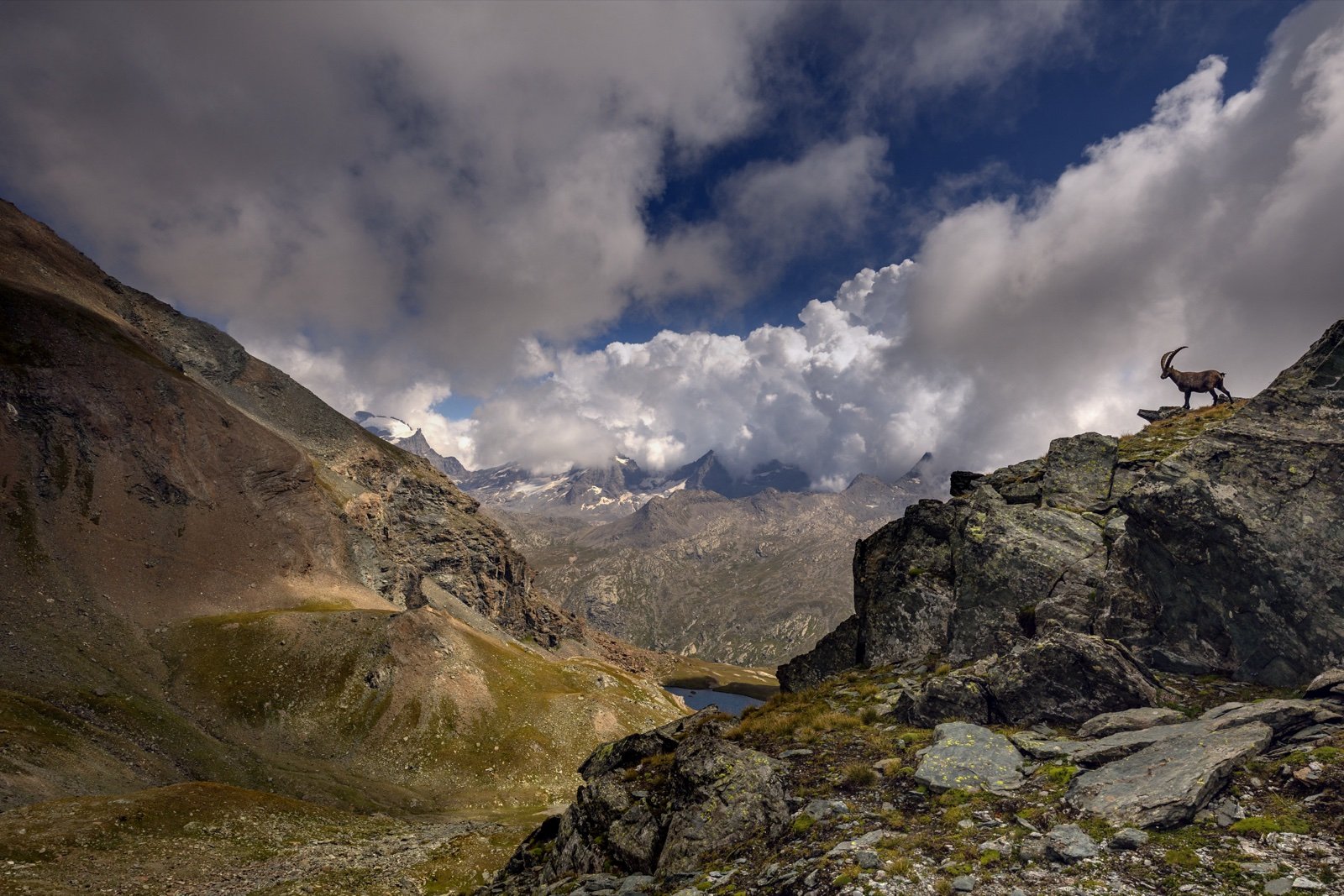
The Gran Paradiso began with the ibex. By the early 19th century the species had shrunk to a few hundred animals around the massif, and on 3 December 1922 the land of a former royal hunting reserve became the first national park in Italy, set up to preserve its fauna, flora, geology and landscape.
The steps, from the hunting ban to international recognition:
- 1821: a decree of Carlo Felice, King of Sardinia, bans ibex hunting.
- 1856: the royal hunting reserve is created.
- 1913: the last royal hunt; Victor Emmanuel III then gives his Gran Paradiso land to the State and asks for a national park to be considered.
- 3 December 1922: the Parco Nazionale Gran Paradiso is established.
- 5 August 1947: the Ente Parco Nazionale Gran Paradiso is created, with Renzo Videsott as its first director.
- 1955: the Paradisia alpine botanical garden opens at Valnontey, in Cogne, at 5,577 ft.
- 2006: European Diploma for Protected Areas.
- 14 November 2014: the IUCN Green List, the only Italian national park selected; the listing was renewed in 2017.
Royal mule tracks, hunting lodges and the return of the bearded vulture
The kings left their mark on the paths. The mulattiera reale is the old road Victor Emmanuel II drove up by carriage to the hunting lodge of Orvieille, and other royal lodges still stand in the valleys:
- Orvieille, a former royal hunting house at 7,113 ft above Dégioz, in Valsavarenche.
- The Casa Reale di Caccia del Gran Piano, three hours’ walk from Noasca, in the Orco valley.
- At Ceresole Reale, the Homo et Ibex visitor centre tells the long story of people and ibex.
Birds and wildlife the park points to
- The bearded vulture, reintroduced, has its own visitor centre in the Rhêmes valley, “Bentornato gipeto!”.
- Black grouse favour the larch and Swiss stone pine woods on the way to the Chabod hut.
- Ibex and chamois are to be watched from a distance, and never fed.
Five valleys on two sides of the massif
About 52% of the park lies in the Aosta Valley and 48% in Piedmont (German Wikipedia figures). More than 311 mi of paths link its five valleys:
- Cogne (Aosta Valley), the best known, facing the Gran Paradiso glaciers; a 27 mi cross-country ski race, the Marcia Gran Paradiso, is held there every year.
- Valsavarenche (Aosta Valley), the narrowest and wildest of the Aosta valleys, base for ascents and long crossings of the massif.
- Rhêmes (Aosta Valley), with a flat valley floor of typical glacial shape.
- Orco (Piedmont), with the Noasca centre on glacial landforms and an environmental education centre open all year by booking.
- Soana (Piedmont), reached through Pont Canavese.
The Nivolet plateau
Between the Orco valley and Valsavarenche, the Piano del Nivolet stretches for more than six kilometres at 8,202 ft, with lakes and peat bogs. The SP 50 road that climbs to it from Lake Serrù is closed to traffic in winter. Two points for drivers:
- Beyond Noasca the road narrows into tight bends, and private coaches longer than 39 ft must be fitted with a working lift (the park’s wording) and driven by experienced drivers.
- All forms of camping are banned on the Nivolet.
Frequently asked questions
Do you need a NivoletCard to drive to the Nivolet?
Yes, on regulation days: in 2026 every weekend in July from 4 July, every day from late July to 30 August and the first two weekends of September. It cost €10 per motor vehicle, with a cap of 350 vehicles a day.
Are dogs allowed in Gran Paradiso National Park?
Only on a lead, on the valley floors and, from 15 July, on a few designated paths. The rest of the park is closed to dogs.
Can you wild camp in Gran Paradiso?
No. Tents are allowed only in equipped campsites. A single-night emergency mountaineering bivouac is tolerated outside huts or when they are full.
Can you fly a drone in Gran Paradiso National Park?
No, not for leisure or amateur filming. Flying over any protected area is banned, drones included, and only non-recreational uses can be authorised, on request.
How do you get to Gran Paradiso National Park by train?
To Aosta station, then SAVDA buses for the Aosta Valley side; for Piedmont, trains to Turin, Ivrea or Pont Canavese (line SFM1), then GTT buses.
What is the most popular hike in Gran Paradiso?
Valnontey to the Rifugio Vittorio Sella: about 5 km and 2 h 30 up, with about 1,000 m of ascent, open from July to September.
Where can you see ibex in Gran Paradiso?
Near the Rifugio Vittorio Sella, at Lake Lauson, in the evening or early morning, according to the park’s page on the Cogne valley.
When does the Paradisia garden flower?
From mid-June to mid-September, at Valnontey in Cogne, with alpine flowers, medicinal plants and lichens.
Other protected areas nearby
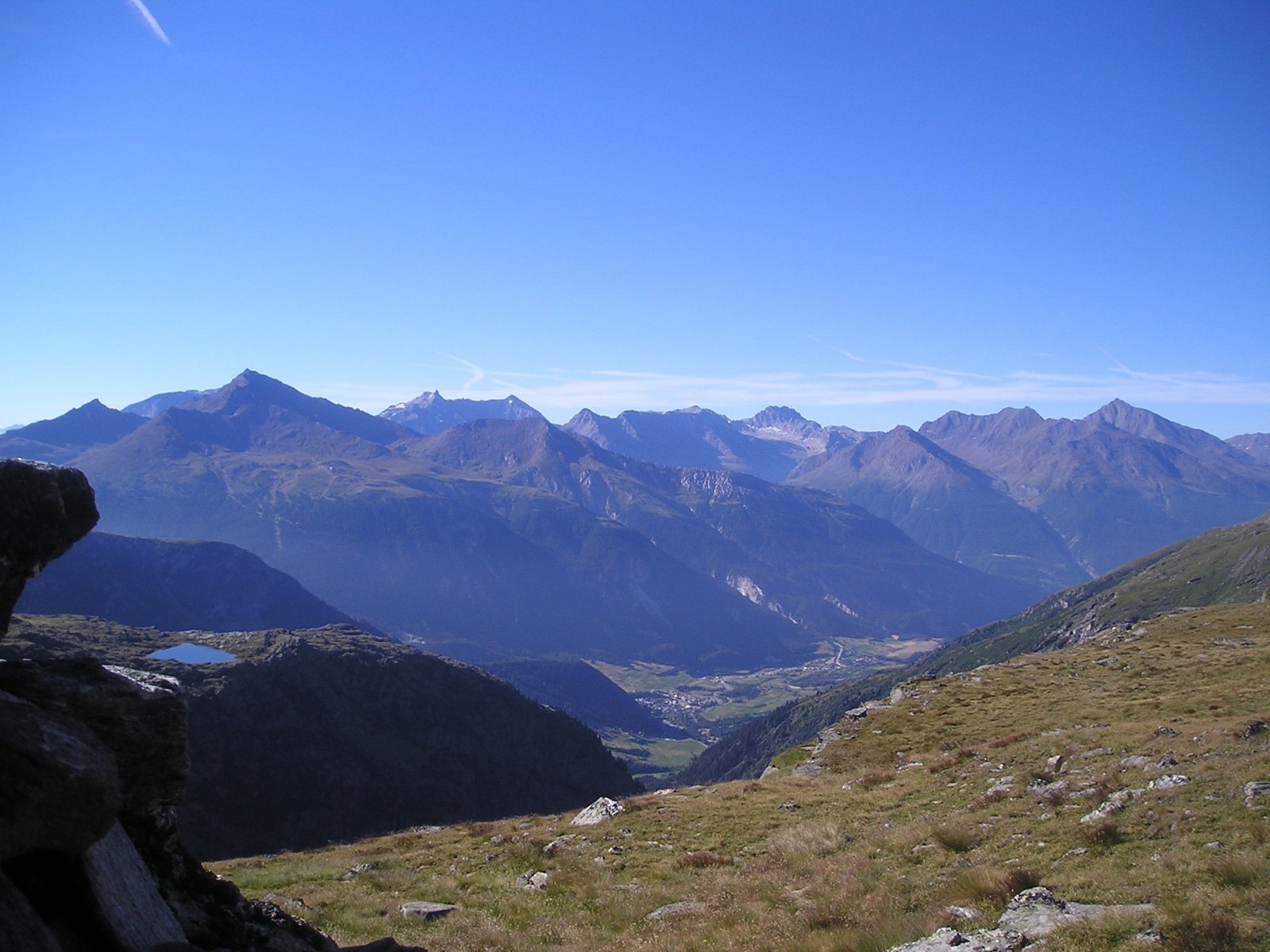
Vanoise National Park
1963: France’s first national park, created to save the ibex.26 mi awayNational park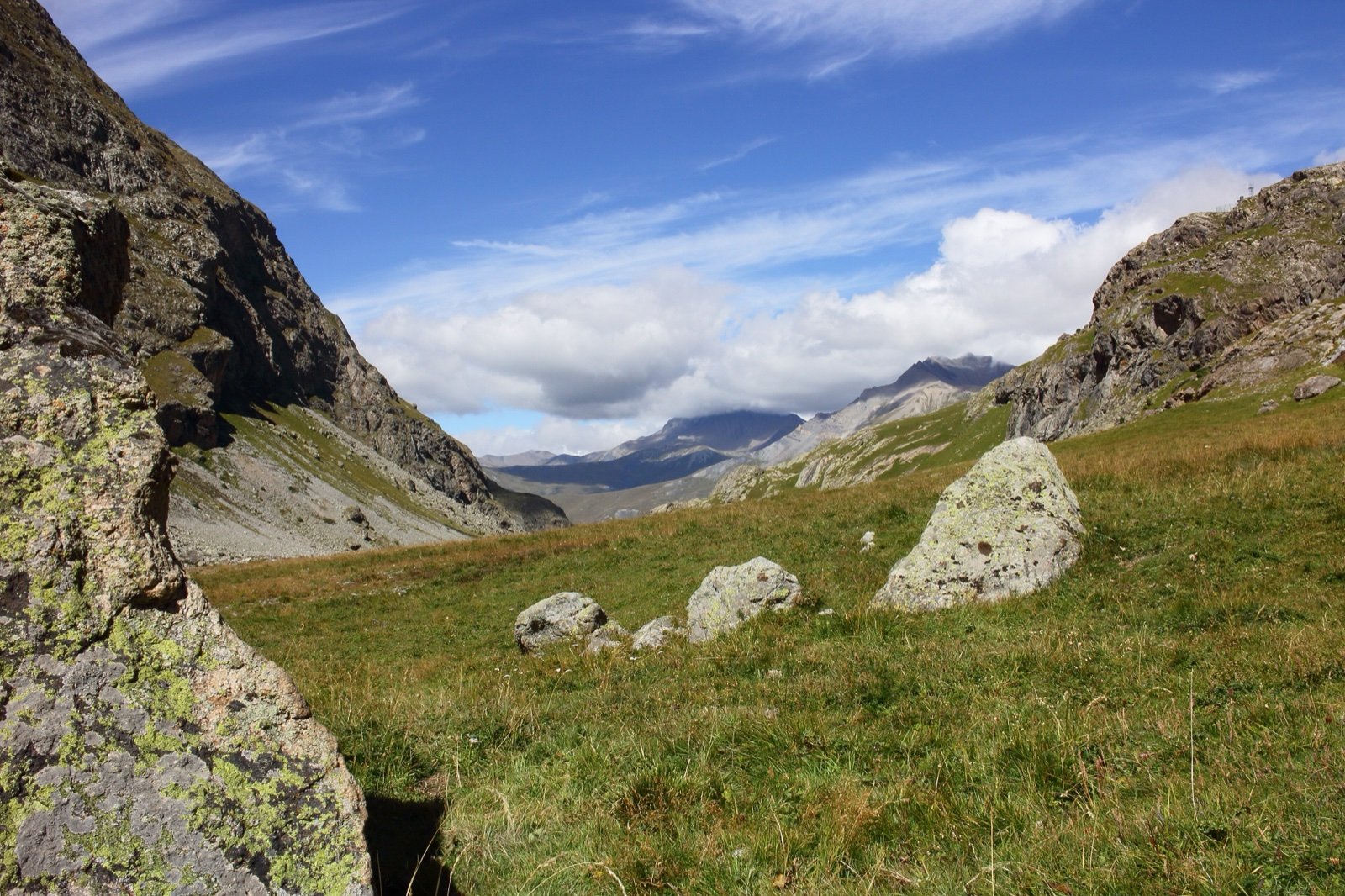
Écrins National Park
150 summits above 9,843 ft, crowned by the 13,458 ft Barre des Écrins.68 mi awayNational park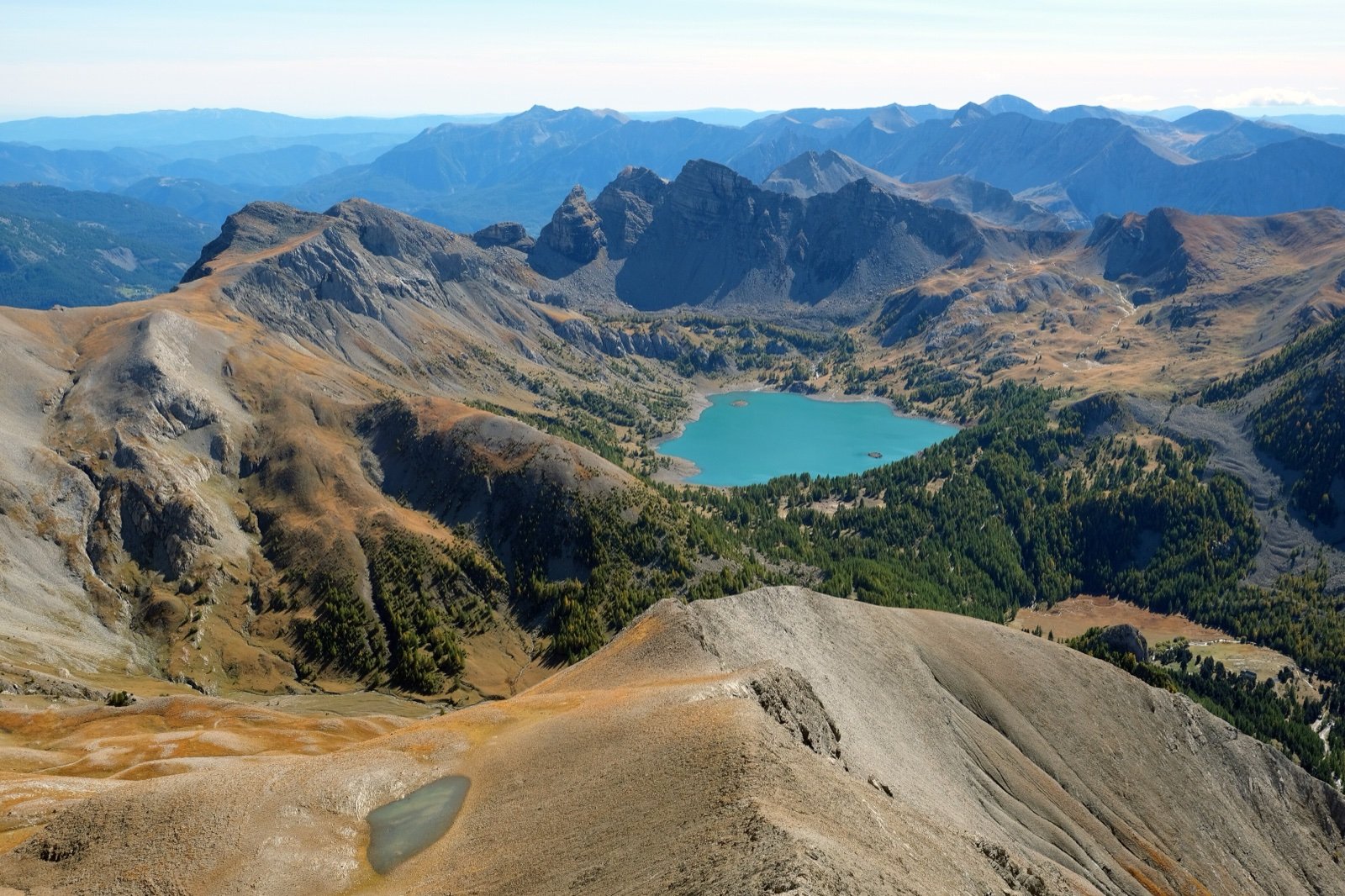
Mercantour National Park
40,000 rock engravings around Mont Bego, from about 3300 BC.93 mi awayNational parkSources
4 sources
- Parco Nazionale Gran Paradiso consulted on October 14, 2026
- OpenStreetMap consulted on October 14, 2026
- Wikidata consulted on October 14, 2026
- Wikipedia consulted on October 14, 2026